
5 Regulations and Standards Driving Energy-Efficient AC Innovations

Share

Table of Contents
Energy-efficient air conditioning is no longer just a product upgrade—it is a regulatory response to rising energy demand, higher electricity costs, and climate pressures. In the Philippines, where air conditioning is essential rather than optional, government standards and international benchmarks are directly shaping how modern AC systems are designed, sold, and used.
This article explains the key regulations and standards influencing energy-efficient AC innovation, with a focus on what matters most for Philippine households and businesses.
Why Energy Efficiency Regulations Matter in the Philippines
The Philippines faces a unique combination of challenges:
- High year-round cooling demand due to a tropical climate
- Rising electricity prices compared to regional neighbors
- Increased strain on the national power grid during peak months
- Government commitments to reduce carbon emissions
Because air conditioning accounts for a significant share of residential and commercial energy consumption, regulators view AC efficiency as one of the fastest ways to reduce national energy demand without sacrificing comfort.
Philippine Energy Labeling Program (PELP)
One of the most influential local policies is the Philippine Energy Labeling Program, overseen by the Department of Energy.
Under this program:
- All window-type and split-type air conditioners sold in the country must display an official energy label
- Labels show energy efficiency ratings, cooling capacity, and estimated electricity consumption
- Products are tested using standardized conditions to ensure fair comparison
This requirement pushes manufacturers to improve compressor efficiency, inverter technology, and heat exchange performance in order to remain competitive on store shelves.
For consumers, the label simplifies decision-making by translating technical efficiency data into visible, comparable information.
Minimum Energy Performance Standards (MEPS)
Minimum Energy Performance Standards define the lowest efficiency level an air conditioner is legally allowed to have.
In practical terms:
- Low-efficiency AC models are gradually phased out of the market
- Importers and manufacturers must meet updated efficiency thresholds
- Older, energy-wasting designs become commercially unviable
As MEPS thresholds rise over time, manufacturers are forced to invest in innovation rather than rely on legacy designs. This is one of the strongest drivers behind the widespread adoption of inverter-based AC systems in the Philippine market.
International Standards Influencing Local AC Design
Although Philippine regulations are local, many technical benchmarks are aligned with international standards, especially for testing and performance measurement.
Common influences include:
- ISO standards for performance testing and safety
- IEC standards governing electrical efficiency and system reliability
- Regional benchmarks used across Southeast Asia to harmonize product testing
Alignment with international standards allows global manufacturers to introduce advanced models into the Philippine market more quickly, without extensive redesign.
Energy Efficiency Ratio (EER) and Seasonal Metrics
Traditional AC ratings relied heavily on Energy Efficiency Ratio (EER), which measures output under fixed conditions. Newer standards increasingly emphasize seasonal performance metrics that reflect real-world usage.
These metrics account for:
- Varying outdoor temperatures
- Part-load operation instead of constant full power
- Daily and seasonal usage patterns
For Philippine users, this matters because air conditioners rarely operate at maximum capacity all day. Systems optimized for part-load efficiency consume less electricity over time, even if upfront costs are higher.
Environmental Regulations and Refrigerant Standards
Energy efficiency is closely linked to refrigerant policy.
Modern regulations encourage or require:
- Lower global warming potential (GWP) refrigerants
- Reduced ozone-depleting substances
- Improved system sealing to minimize refrigerant leakage
These rules have accelerated the shift toward newer refrigerants that support higher efficiency while reducing environmental harm. As a result, AC manufacturers now design systems where compressor performance, refrigerant chemistry, and heat transfer efficiency are tightly integrated.
Impact on AC Innovation and Product Design
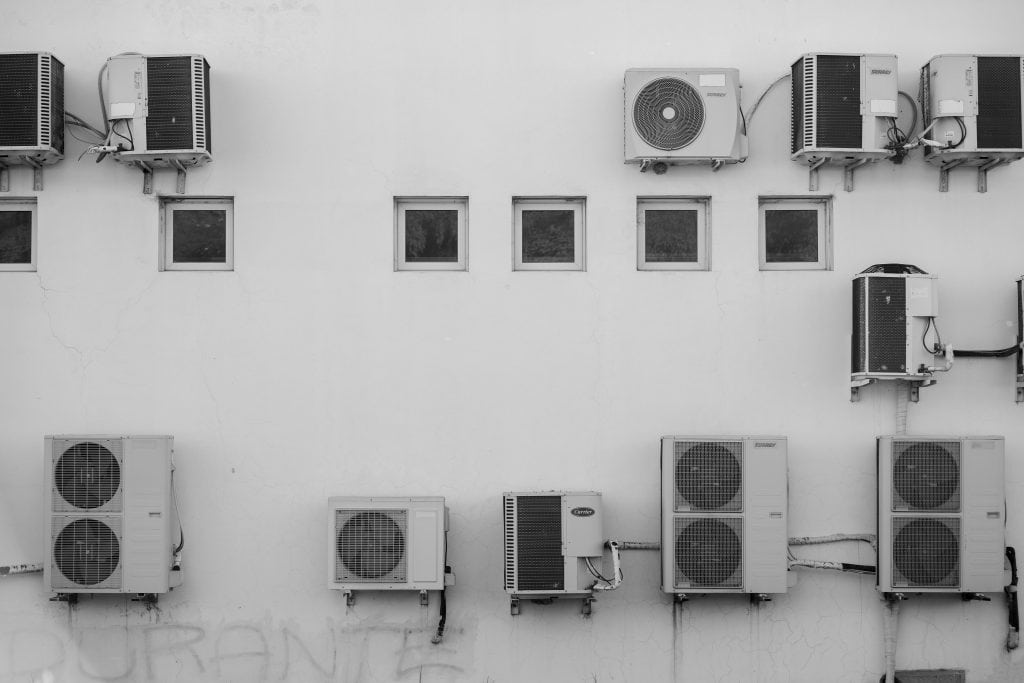
Regulatory pressure has reshaped how air conditioners are engineered. Key innovations driven by standards include:
- Advanced inverter compressors that adjust speed dynamically
- Smarter sensors that reduce unnecessary cooling
- Improved insulation and airflow design for indoor units
- Integration with smart thermostats and energy-monitoring systems
Instead of focusing only on cooling power, manufacturers now compete on total energy consumption over the unit’s lifetime.
What This Means for Philippine Consumers
For Filipino households and businesses, these regulations translate into tangible benefits:
- Lower monthly electricity bills
- More consistent indoor comfort
- Reduced strain on local power infrastructure
- Longer equipment lifespan due to optimized operation
While energy-efficient AC units may cost more upfront, regulatory-driven innovation has significantly improved long-term value.
Looking Ahead: Stricter Standards, Smarter Systems
Energy efficiency standards are expected to tighten further as electricity demand grows and climate targets become more aggressive. Future AC systems in the Philippines will likely feature:
- AI-assisted load prediction
- Deeper integration with solar and battery systems
- Higher seasonal efficiency benchmarks
- Expanded energy labeling transparency
Regulations will continue to act not as barriers, but as catalysts—forcing innovation that benefits both consumers and the environment.
