
Innovative Materials and Techniques in Green AC Manufacturing

Share

Table of Contents
Air conditioning is a lifeline in the Philippines. With humid summers, soaring temperatures, and millions of households depending on cooling every day, AC demand continues to rise. The challenge? Traditional units use energy-hungry compressors, older refrigerants, and materials that leave a big environmental footprint. That’s why manufacturers are turning to innovative materials and smart engineering to build the next generation of green AC systems.
Below are the key technologies shaping cleaner, more efficient cooling in the country.
Recycled And Low-Impact AC Materials
Many manufacturers are moving away from resource-heavy metals and plastics and are now turning to more sustainable materials in their AC designs. Recycled aluminum frames and copper coils help reduce the need for raw mining, easing the environmental impact of production.
Some brands are also integrating bio-based interior plastics, which rely less on fossil fuels and lower overall emissions. To further cut waste, modular components are becoming more common, allowing individual parts to be repaired or replaced instead of scrapping the entire unit — extending the AC’s lifespan and minimizing landfill waste.
For Filipino households, these changes mean lighter units, fewer parts to replace, and lower long-term costs.
Advanced Refrigerants With Lower Global Warming Potential

Older ACs rely on refrigerants like R22, which trap heat in the atmosphere and harm the ozone layer. Today’s green ACs use next-generation refrigerants with dramatically lower global warming potential (GWP).
Common eco-friendly options include:
- R32 — already widely used in new PH inverter ACs
- R290 (propane-based) — strong cooling performance with extremely low GWP
- CO₂-based refrigerants — still emerging, but promising for heavy-duty systems
These refrigerants cool faster, require less power, and help the Philippines meet environmental goals like energy efficiency labeling and reduced emissions under international agreements.
High-Efficiency Inverter And Variable-Speed Motors
Instead of blasting at full power and switching off repeatedly, inverter ACs run smart. They adjust motor speed depending on room temperature, reducing unnecessary electricity use.
Inverter technology delivers several key advantages for modern air conditioners. Because the compressor adjusts its speed instead of switching on and off repeatedly, households can save around 30–50 percent on energy consumption. This smoother operation also reduces wear and tear, helping the compressor last longer.
Temperature control becomes more stable and comfortable, without sudden blasts of cold air or warm fluctuations. Another major benefit is reduced noise, making inverter units ideal for small rooms, apartments, and homes where a quiet indoor environment matters.
In a country where electricity rates are among Asia’s highest, inverter tech is a powerful money saver.
Phase-Change Materials For Better Cooling Performance
One exciting trend in green AC manufacturing is the adoption of phase-change materials (PCMs). These materials trap heat while changing from solid to liquid, then release it slowly—helping AC units cool rooms more efficiently.
Phase-change materials (PCMs) offer several helpful advantages for green AC systems. By absorbing heat during the hottest parts of the day, they reduce the strain on the compressor when demand peaks. These materials can also store cool energy when temperatures are lower, releasing it gradually to support the system. This helps smooth out power fluctuations and prevents sudden spikes in electricity use.
Altogether, PCMs allow air conditioners to deliver longer-lasting comfort while using less energy, which is especially valuable in hot and humid climates like the Philippines.
3D Printing And Precision Manufacturing
Modern AC factories are starting to use additive manufacturing to reduce waste and improve design accuracy.
3D printing in AC manufacturing matters because it dramatically reduces waste, since fewer materials are discarded during production. It also allows designers to create more precise and customized airflow paths, which can significantly improve cooling performance and efficiency.
On top of that, 3D printing speeds up prototyping and testing, helping manufacturers develop and release eco-friendly air conditioners much faster than with traditional methods. These smarter manufacturing workflows mean greener products long before the AC even reaches your home.
Smart Controls, Sensors, And IoT Integration
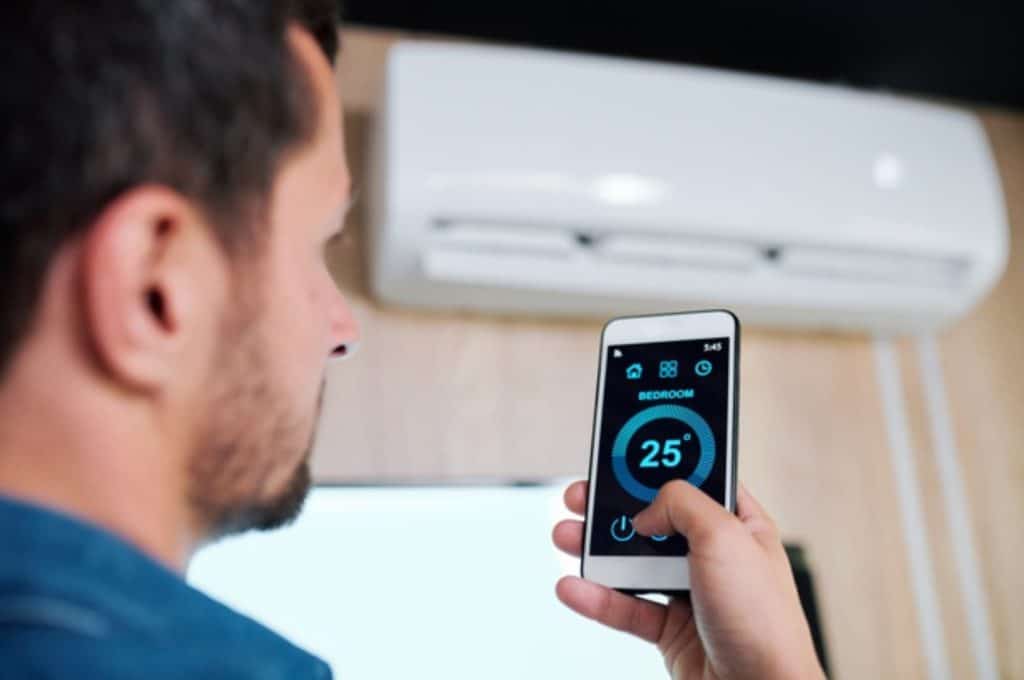
A green AC isn’t just about materials—it’s also about intelligence.
Smart controls and connected features are now becoming a standard part of green AC systems, helping households cut energy waste and improve daily comfort. Occupancy sensors automatically dial down cooling when no one is home, while time-based automation adjusts the temperature throughout the day to match typical routines.
Many units also include predictive maintenance alerts that notify owners when filters, coils, or performance issues need attention, helping prevent efficiency loss before it becomes costly. On top of that, users can control their AC remotely through mobile apps and smart-home platforms, making it easier to manage cooling whether they’re at home, at work, or on the go.
Less wasted cooling = smaller electricity bills + lower carbon footprint.
Why This Matters For Filipino Consumers
Sustainable AC innovation isn’t just a global trend—it’s becoming a necessity in the Philippines, where cooling needs are rising faster than energy supply.
Green AC benefits for households include:
- Lower monthly electricity costs
- Better long-term durability
- Reduced carbon emissions and cooler cities
- Less dependence on harmful refrigerants
As more consumers demand eco-friendly appliances, manufacturers will continue pushing these smart materials and engineering breakthroughs.
The Bottom Line
Green AC manufacturing is evolving quickly, powered by smarter materials, energy-efficient components, cleaner refrigerants, and digital innovation. For Filipino homes and businesses, these advances offer more than comfort—they bring long-term savings and real environmental impact.
The future of cooling in the Philippines is cleaner, quieter, and far more energy-smart than anything we’ve used before.
